
"How to Jump Higher: Mastering Hip Power & Preventing Achilles Injuries"
JUMP
An examination of biomechanical sequencing, tendon elasticity, and injury resilience in athletic performance
When I was studying for the New York State science exam in sixth grade, I vividly recall the textbook using Michael Jordan's 48-inch vertical jump as an example for height measurement. A 48-inch vertical is absurd - if not hyperbole. I grew up a LeBron fan, so watching him fly over defenders for a poster or chase down an opponent on a fast break for a block was both frequent and astounding. My resistance training journey was ignited by my desire for a higher vertical jump. For decades, it has remained a defining measure of athletic capability.
Vertical jump ability is a critical factor in many sports, and improving it requires a deep understanding of biomechanics combined with smart training strategies. In Episode 7 of the High Performance Physiology podcast, experts Chris Beardsley and Rob Mauceri highlight a crucial concept: the proximal-to-distal sequence. They argue that the primary drivers of jump performance are the proximal musculature - the hip extensors, glutes, and hip flexors - and that plyometric exercises must be performed in a fresh state to maximize their benefits.
In this article, we'll unpack those insights with evidence from peer-reviewed research, then critically examine the role of the often-neglected distal muscles (calves and lower quads). We'll explore why some coaches caution against overemphasizing calf training (to avoid adding limb mass), and counter that with recent data on injury trends - like a spike in Achilles tendon ruptures - and science-backed reasons to strengthen the ankle musculature for tendon health, injury prevention, and better landing mechanics. Finally, we'll tie it all together into practical programming recommendations: an evidence-based yet accessible game plan that coaches and athletes can use to periodize vertical jump training for both performance and safety.

Photo by Emanuel Eduardo on Unsplash
The Proximal-to-Distal Sequence in Vertical Jumping
In human movement, power often flows from the center of the body outward. This proximal-to-distal sequencing means large, strong muscles near the torso initiate a movement, and the energy then transfers to smaller, distal segments. Vertical jumping is a textbook example: an effective jump involves well-timed coordination where the hips fire first, followed by the knees, then the ankles - a rapid sequence of extension.
Research confirms that athletes who utilize a pronounced proximal-to-distal strategy achieve greater jump heights. One study of volleyball players found that a longer delay between hip extension and knee extension (i.e., letting the hips lead the movement) was strongly correlated with higher vertical jumps. These jumpers generated higher peak net joint moments at the hip and ankle, along with greater angular acceleration of the thigh and leg, compared to those who extended everything simultaneously.
The best jumpers don't simply "explode up" all at once - they sequence the explosion, starting with powerful hip drive and ending with an ankle snap to harness momentum effectively.
This sequencing is a key reason an arm swing adds to jump height: a vigorous arm swing encourages the torso and hips to lead, reinforcing the proximal-to-distal timing. The result is a smoother transfer of energy upward, rather than energy leaks from joints firing out of sync. Coaches often cue athletes to "use the hips" or "drive through the glutes" when jumping. These cues align with what the science shows about sequencing.
Episode 7 of the podcast underscored that a well-coordinated jump is not just about raw strength in one joint, but about skillfully synchronizing the contributions of each joint from the top down. This has practical implications for training: it suggests we should strengthen those proximal muscles and teach athletes how to time their movement for maximal force transfer.
Proximal Musculature: The Engine of the Vertical Jump
Why the emphasis on the hips, glutes, and related musculature? Simply put, these larger muscle groups generate the majority of the force in a vertical leap. Classic biomechanical analyses have shown that the knee and hip extensors contribute enormously to jump performance.
In one oft-cited study, the knee extensors contributed nearly half of the work in a maximal jump (about 49%), with the hip extensors contributing roughly 28% and the ankle plantar flexors about 23%. In other words, the quads and glutes together do about three-quarters of the "work" of propelling the body upward, highlighting how critical the proximal leg muscles are.
It's important to note that these numbers can vary widely between individuals. Elite jumpers often display a jumping style that relies even more on the hips. The proximal musculature - gluteus maximus, hamstrings, and hip flexors - can be thought of as the high-horsepower engine of the jump. The glutes and hamstrings drive powerful hip extension, while the hip flexors (iliopsoas and others) play a role during the countermovement, helping to quickly reverse from the dip to upward drive, and in swinging the thighs upward during flight.
Training anecdotes and research align here: exercises that build maximum strength and power in the hips and thighs - such as squats, deadlifts, and hip thrusts - tend to translate to better jump ability. Indeed, athletes with higher relative strength in squat or power clean tests usually record higher vertical jumps, reinforcing that a stronger engine (proximal muscles) leads to higher horsepower in your jump.

Photo by Alonso Reyes on Unsplash
One reason the glutes are so pivotal is their leverage and size. The hip joint can produce huge extension torques, especially when the athlete leans forward and then extends explosively. Strong hip extensors help achieve a violent hip snap that elevates the center of mass before the ankles even get involved.
As Mauceri and Beardsley state: if you're chasing a higher vertical jump, prioritize strengthening these big muscles. From a practical standpoint, this might mean structuring training to include heavy compound lifts for the lower body in low-to-moderate rep ranges to build maximal force output without excessive fatigue. Heavy strength work builds the capacity of the proximal musculature to produce force, which is the foundation for later power training.
Plyometrics: Why "Fresh" Is Best for Explosive Gains
Another key insight from the podcast is that plyometric drills - jump training, bounds, depth jumps, and similar exercises - should be done unfatigued, ideally at the beginning of a workout or in a separate session dedicated to speed and power. This advice stems from the nature of plyometrics: these exercises rely on maximal effort, fast-twitch muscle fiber recruitment, and an intact stretch-shortening cycle - none of which thrive under fatigue.
If an athlete is tired (say, after heavy squats or a hard practice), their jump quality and explosiveness in plyometrics will suffer. They simply cannot generate the same peak power or maintain crisp technique when the nervous system is dulled and muscles are exhausted.
Olympic lifts require explosive force production, and creating fatigue reduces the desired effects. These exercises need to be performed early in the workout.
NSCA Program Design GuidelinesStrength and conditioning guidelines support this sequencing. Performing explosive, technical movements early in a session yields better results because the athlete can apply maximal force with optimal form. The same logic applies to plyometric jumps: you want full muscle firing and coordination, which you get only when fresh.
Fatigue not only lowers immediate performance (e.g., jump height, sprint speed) but can also alter movement patterns in a way that reduces the training stimulus or even increases injury risk. A tired athlete might land with poor alignment or lose the stiff ankle strategy needed for an efficient rebound.
If combining strength and plyometric training on the same day, do your jump training or high-speed drills first, after a proper warm-up, when energy levels and focus are high. Alternatively, dedicate separate sessions or days to plyometrics, ensuring adequate recovery.
The podcast hosts underscore this point because it's a common mistake to leave the "quick jumps" until the end of a leg workout. By then, the athlete is gassed and cannot perform the jumps with the velocity and intention that make plyometrics effective. Remember, plyometric training is about quality over quantity. A few sets of truly explosive, well-executed jumps yield far more benefit than many sluggish jumps in a fatigued state. Always prioritize neuromuscular freshness for plyos to maximize gains in reactive strength and vertical jump performance.
Tendon Springs and the Stretch-Shortening Cycle
No discussion of vertical jump biomechanics is complete without addressing the stretch-shortening cycle (SSC) and the role of tendons. The SSC is the mechanism by which a muscle-tendon unit, when quickly stretched (eccentric action), stores elastic energy and triggers a more forceful subsequent contraction (concentric action).
In a countermovement jump (the typical quick dip and jump), the SSC is at play: as you dip down, the calf-Achilles tendon complex, quadriceps tendon, and other elastic structures stretch and load up like springs. When you explosively reverse to jump up, those springs recoil, adding to the muscle-generated force.
This is why a countermovement jump produces a higher launch than a non-countermovement (squat) jump even if you start from the same knee angle. The countermovement preloads the system. In fact, seminal research by Bobbert et al. found that countermovement jumps are on average 5–10% higher than static jumps because the dip allows the muscles to build up force and achieve greater joint moments at the start of push-off.
The greater joint moments (particularly at the hip and knee) at the start of upward drive translate to more work done and a higher center of mass at takeoff. Essentially, the quick stretch in the SSC permits the muscles to hit the gas harder from the get-go.
Interestingly, Bobbert's modeling work suggested that while elastic energy storage plays a role, the biggest benefit of the countermovement was allowing muscles to reach a high level of active force before shortening. In other words, the muscles and tendons together create a potent effect - the tendons store energy and the muscles reach peak tension - resulting in a more powerful concentric phase.
Short vs. Long Tendons in the Lower Body
"Positional" tendons in proximal muscles (like the quads and glutes) are short and stiff, built to transmit force directly from muscle to bone with minimal stretch. "Energy-storing" tendons in distal muscles (like the Achilles) are long and compliant, designed to stretch 8–11% under load and recoil like springs.
This means the hips and thighs act as the primary force generators, while the lower leg tendons act as amplifiers - they soak up impact and fling back energy for free. More than 90% of the energy you put into stretching the Achilles can be returned as propulsive force, making it a superb elastic spring. Great jumpers leverage this by having not only strong muscles but also springy, resilient tendons.
A practical example of tendon contribution is the "bounce" you see in reactive jumps (like repeated hops or depth jumps). Athletes with well-trained Achilles tendons exhibit a rapid, pogo-stick bounce with minimal ground contact time - a hallmark of an efficient SSC and stiff tendon. Training can develop this: high-load strength work and plyometrics both stimulate the tendons to become stiffer and more robust.
One study cited in Human Locomotion had runners do heavy isometric calf contractions (5×4 reps of 6-second holds) over 14 weeks; the result was a 4% improvement in running economy, indicating significantly better tendon energy return. This illustrates that building tendon capacity through strength and isometric training can directly enhance performance by increasing elastic return and reducing energy waste - and it likely carries over to jumping as well.
The Case Against Calf Isolation: Mass vs. Benefit Dilemma
The High Performance Physiology podcast raised a provocative point: they suggested minimizing training focus on the distal musculature - namely the calves (gastrocnemius, soleus) and even the lower portion of the quadriceps - to avoid adding non-functional mass to the lower limbs.
The rationale is rooted in physics: adding muscle bulk far from the center of mass can impair explosive movement due to increased moment of inertia. In plain terms, heavier calves can be a hindrance - it's extra weight at the end of the leg that your hips now have to swing and your ankle has to lift during a jump. If that added mass doesn't contribute proportionally more force, it could net out as a negative for jump height.

Photo by Element5 Digital on Unsplash
There is scientific support for this idea. Biomechanics experiments have looked at how adding weight at different points on the body affects jumping. The findings are intriguing: adding weight close to the body (e.g., wearing a weighted vest) certainly makes you produce more force but has a relatively smaller negative effect on jump height. In contrast, adding the same weight to your ankles (thus increasing both weight and rotational inertia) hurts performance more dramatically.
One study cleverly used a combination of weighted vests and elastic bands to separate the effects of weight vs. inertia. It showed that purely increasing mass (weight) caused the smallest reduction in jump height and allowed the highest power output, whereas increasing the moment of inertia of the limbs led to the greatest drop in jump height and power. When they simulated added inertia without extra weight, jump performance suffered the most.
An athlete is better off adding 1 kg of muscle at the hips than 1 kg at the calves, from a jump performance standpoint.
Why? Because weight at the calves slows down the leg swing and final push-off more than weight at the hips slows down the initial drive. Think of spinning with weights in your hands versus at your chest - weights further out make it much harder to spin fast. Similarly, extra calf girth could slow the angular velocity of the swinging leg segments in a jump.
Beardsley and Mauceri's stance is that training time (and hypertrophy) should be prioritized to the big muscle groups that most directly improve jump force - glutes, quads, hamstrings - rather than doing endless calf raises which might hypertrophy the lower leg disproportionately. In extreme cases, athletes who overdevelop their calves might find they gained leg mass that doesn't significantly add to jump impulse but does add to the load they have to lift off the floor.
It's worth noting this is a nuanced point and not an absolute rule to never train calves, but a reminder to consider the cost-to-benefit ratio of adding distal mass. Many top high jumpers and dunkers have relatively slender lower legs compared to their muscular thighs. They develop tremendous ankle stiffness and power, but not necessarily massive calf muscles. The podcast advocates for achieving ankle power through plyometrics and technical work, rather than heavy isolated calf strengthening that could induce hypertrophy.
However, before you swear off calf training entirely, we should examine the other side of the coin: neglecting the distal chain has its own risks and downsides, especially when it comes to injury prevention and well-rounded athleticism.
The Achilles Heel: Why the Lower Leg Matters More Than Ever
In recent years, sports clinicians have observed a worrying trend: a spike in Achilles tendon injuries in sports like basketball. The 2024–2025 NBA season, for example, saw a rash of high-profile Achilles ruptures - from All-Stars like Kevin Durant a few years prior to Damian Lillard, Jayson Tatum, and Tyrese Haliburton more recently, all going down with devastating tendon tears in the same season.
During the 2025 NBA playoffs alone, multiple players ruptured their Achilles, marking one of the highest seasons on record for this injury. Medical experts attribute the rise to modern training creating an imbalance - athletes develop tremendous strength in their upper legs, but their lower legs haven't kept up.
A common thread in expert analysis is that modern training may be creating an imbalance: athletes today develop tremendous strength and power in their upper legs, but their lower legs haven't kept up. Over-specialization in proximal muscle training (think heavy squats, power cleans, endless jump repetitions) with relatively less direct calf/Achilles conditioning could be leaving the Achilles tendon poorly prepared for the forces it's being asked to handle.
Dr. Karin Silbernagel, a leading Achilles researcher, pointed out that as training programs prioritize glutes and quads, the calf and Achilles might be lagging in strength and capacity:
At this point, we need to start thinking about the calf and Achilles in the same way we do about quads. Do we have enough strength to tolerate the sport we're doing? The lower leg is lagging behind some of the other things that we do.
Dr. Karin Silbernagel, Achilles ResearcherIn other words, if an athlete can squat double bodyweight but can't do a heavy single-leg calf raise or lacks endurance in the calf complex, that disparity could spell trouble when they perform an explosive movement. The Achilles tendon endures some of the highest loads of any structure in the body - several times body weight with every jump or hard cut. If the calf muscles and Achilles tendon aren't robust enough to absorb and generate these forces repeatedly, the risk of strain or rupture climbs.
The Evidence for Calf Strength and Tendon Capacity
A systematic review in the British Journal of Sports Medicine identified reduced plantarflexor strength as a modifiable risk factor for Achilles tendinopathy (chronic Achilles injury). In plain terms, weaker calf muscles (relative to the demands placed on them) are associated with a higher likelihood of developing Achilles problems. Strong calves, on the other hand, can better protect the tendon by absorbing load.
Furthermore, specific training can increase the stiffness and resilience of the Achilles tendon itself - heavy slow resistance training (like weighted calf raises, both eccentric and concentric) has been shown to improve tendon structure and pain in those with tendinopathy. Even if you're healthy, proactively strengthening the distal chain (calf-Achilles complex) can increase its load tolerance, potentially preventing injuries before they happen.
Landing Mechanics and Athletic Function
While the hip and knee tend to absorb the bulk of energy in a textbook soft landing, the ankle plays a crucial role as the first point of contact. A well-conditioned calf-Achilles complex acts like a shock absorber and spring on landing: it controls ankle dorsiflexion under load and helps dissipate impact forces that would otherwise transmit to the knee or beyond.
Athletes with weak or stiff calves often exhibit "heel-heavy" or awkward landings, as they cannot eccentrically control the descent on the balls of their feet. Over time, this can contribute to knee issues or plantar fascia problems. In contrast, a strong calf allows the athlete to land quietly and rebounce if needed, indicating efficient energy absorption and return.
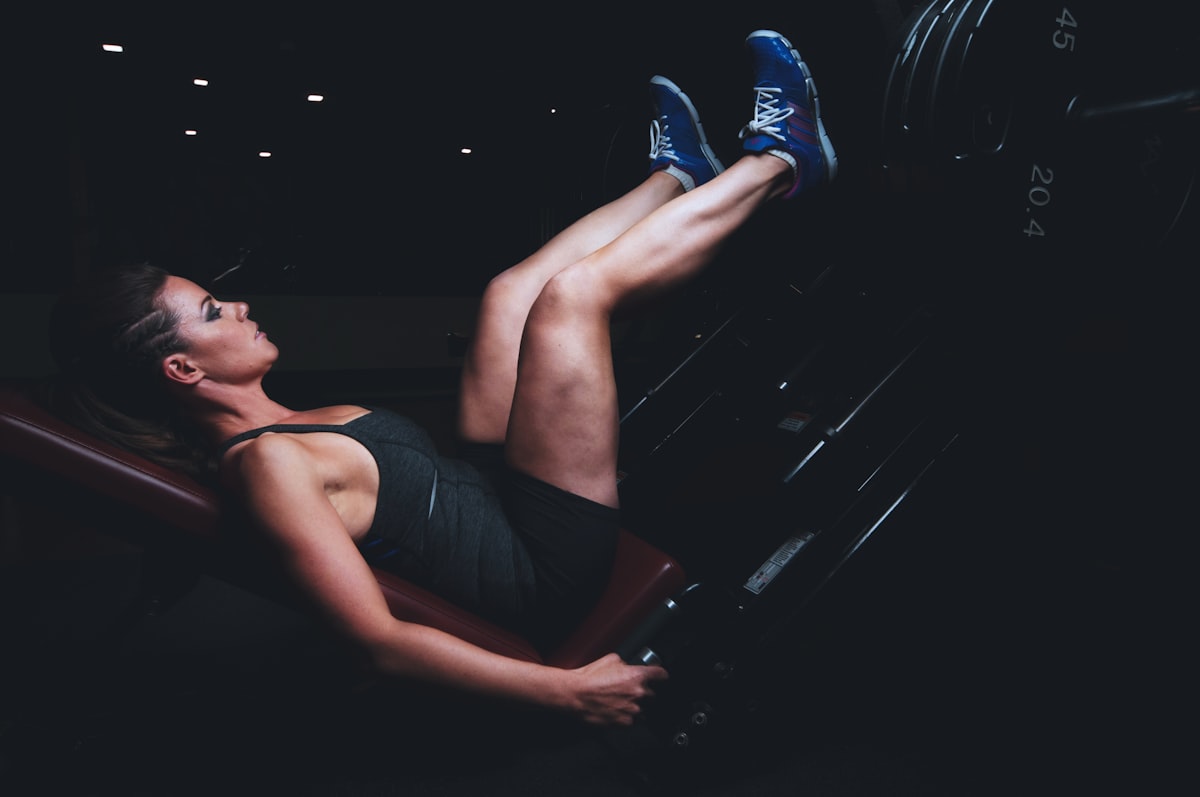
Photo by Scott Webb on Unsplash
Performance Benefits of Lower Leg Training
From a performance angle, the lower leg isn't just about mitigating negatives - it can also add positives. Strengthening the foot and ankle musculature has been shown to improve jump performance. Research from Japan found that doing high-repetition toe flexion exercises (essentially foot/calf work) significantly improved vertical jump height and sprint speed in just 8 weeks. In that study, athletes who did 200 toe-curling repetitions three times per week jumped higher and ran faster than before.
Moreover, a suite of recent studies have consistently shown that simple foot and ankle strengthening drills can increase metrics like rate of force development and jumping distance. The mechanism is likely twofold: some strength gain in the muscles, and enhanced tendon stiffness or neural drive, making the lower leg more effective at transmitting and rebounding force.
All this evidence builds a compelling counter-argument to the idea of completely minimizing distal training. Yes, you don't want to overdo calf hypertrophy to the point of adding unnecessary bulk. But targeted strengthening and periodization for the distal chain can improve tendon capacity and reduce injury risk, ultimately supporting your performance. In the long run, a ruptured Achilles is far more detrimental to athletic performance than a slightly heavier calf muscle.
The key is finding the right balance - incorporating calf/ankle training in a way that benefits tendon health and power without detracting from the primary goal of vertical jump height.
Conclusion: Building the Complete Vertical Jump Athlete
A world-class vertical jump isn't solely manufactured via genetics - it's engineered through a smart blend of strength, speed, and technique training. The proximal-to-distal sequence reminds us that powerful hips drive great jumps, but those forces must pass through the rest of the chain efficiently.
Proximal musculature (hips, glutes, quads) is the prime mover and deserves priority in training, yet the distal musculature (calves, Achilles tendon unit) is the critical spring that can amplify or undermine the whole effort. The latest insights - including those from Beardsley and Mauceri's podcast - stress doing explosive work in a fresh state and not diluting jump training with fatigue. Meanwhile, emerging sport trends and sports medicine research warn that completely ignoring the calves is a recipe for injuries and missed performance gains.
Train your hips and thighs to be strong and powerful. Train your tendons and lower legs to be resilient and springy. Integrate it all in a sensible progression.
A comprehensive vertical jump program will produce an athlete who not only jumps higher but does so repeatedly and safely. With structured periodization - from heavy strength phases to plyometric power - allocating attention to both proximal power and distal durability, coaches can have the best of both worlds: athletes who are explosively powerful and far less likely to break down.
The result? Higher jumps, fewer "Achilles heel" moments, and sustained athletic performance when it counts. By blending science and practical coaching, we ensure that our athletes can soar to new heights - and land on solid ground.
Ready to Elevate Your Athletic Performance?
Get personalized training and nutrition coaching from an RDN and ACSM Certified Exercise Physiologist who understands the science behind athletic performance.
Work With MahirWorks Cited
- Beardsley, C., & Mauceri, R. (2025). High Performance Physiology Podcast, Episode 7 – Vertical Jumping. [Podcast insights on proximal-to-distal sequence and training structure].
- Chiu, L.Z.F. et al. (2014). Proximal-to-distal sequencing in vertical jumping with and without arm swing. J Strength Cond Res, 28(5), 1195-1202. PubMed
- Hubley, C.L., & Wells, R.P. (1983). A work-energy approach to determine individual joint contributions to vertical jump performance. Eur J Appl Physiol, 50(2), 247-254. Full Text
- Leontijevic, B. et al. (2012). Effects of loading on maximum vertical jumps: Selective effects of weight and inertia. J Electromyogr Kinesiol, 22(2), 286-293. PubMed
- Bobbert, M.F. et al. (1996). Why is countermovement jump height greater than squat jump height? Med Sci Sports Exerc, 28(11), 1402-1412. PubMed
- NSCA Guidelines – Hoffman, J. NSCA's Guide to Program Design. Human Kinetics
- Pechlivanos, R.G. et al. (2024). Effects of plyometric training techniques on vertical jump performance of basketball players. Eur J Sport Sci, 24(6). ResearchGate
- ESPN – Stephania Bell (2025). "Why all the Achilles injuries in the NBA this season?" ESPN
- Becker's Spine Review – Wallace, C. (2025). "7 Achilles injuries in the 2025 NBA season." Becker's
- O'Neill, S. et al. (2019). Clinical risk factors for Achilles tendinopathy: A systematic review. Br J Sports Med, 53(21), 1352-1361. BJSM
- JOSPT Clinical Practice Guidelines (2018 Update). Achilles Tendinopathy management recommendations. JOSPT
- Martin, R.L. et al. (2020). Current Clinical Concepts: Conservative Management of Achilles Tendinopathy. PMC. PMC
- Lee, J.H. et al. (2021). Contribution of Lower Extremity Joints on Energy Absorption during Soft Landing. PMC. PMC
- Michaud, T. (2024). "The Advanced ToePro Workout to Improve Strength, Speed, and Agility." Human Locomotion. Human Locomotion
